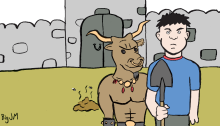
How to Present Your Module, Part 2: Reorganizing Encounters
Wherein I—a guy who has never turned an adventure into a module—tells everyone else how to turn adventures into modules. Using information hierarchies.
A chronological listing of every post The Angry GM has ever… posted.
Wherein I—a guy who has never turned an adventure into a module—tells everyone else how to turn adventures into modules. Using information hierarchies.
In this month’s Ask Angry Mailbag, the Angry GM answers a question about how to distribute magical items when creating D&D adventures. And nothing else.
You never know what you don’t know until you try to do it. I didn’t know, for example, that adventure modules really suck at presenting GMs with the information they need until I tried to write one of my own.
Trying to clear my desk before I head off for my writer’s retreat. Found these three, short topics scribbled on bits of paper and hacked them into a crappy three-for-one article about setting DCs, using passive checks properly, and instructing players.
Let’s see if I can piss off even more people in this follow-up to my article on resolving social actions by telling people they’re using Insight wrong.

When it comes to designing a dungeon map, there’s more than one way to skin a kobold. The key is picking the right way to flay.
Looking for a comprehensive guide to running a great social interaction encounter? Well, this article isn’t it. But it is the preamble to it in which you get a comprehensive guide to resolving social actions.
It’s mailbag time. This month, I discuss Old School Hack, wilderness encounters, encouraging your players to do things they don’t like, and adding warfare to your D&D campaign.
It’s bulls$&% time. And that means complaining about my correspondents again. This time, I’m complaining about how no one understands how to make decisions anymore.
It’s that time of the month: it’s time to make incremental progress on AngryCraft. This time, I define all of the different kind of things you’d make stuff out of.
Ideally, your game will have a perfect one-to-one ratio of players to characters. But sometimes the characters split up or a player skips a game or someone gets killed. What do you do then?
Time to open up the ole mailbag again. This time, I’m talking about how to let your players play two parties, expounding on game balance, telling people how to help their depressed GMs, and explaining why I totally suck and how I’m going to fix it.
There’s a better way to role-play. A more genuine, more engaging way. You just have to start playing your character before you know anything about them. Sounds crazy, I know. But let me explain…
How can you possibly populate an entire world with relatable NPCs and role-playing them effectively? You can’t. Because you suck. But here’s how you can fake it.
Homebrew adventures work so much better with custom-designed monsters. So let’s design some kobolds for my kobold adventure.
Time to dip into the ole mailbag and answer some more reader questions. This time, I’m talking about dynamic chases, money systems, and spellcasting monsters.
Time for my monthly pile of bulls$&%. If you’ll indulge me. I’d like to discuss what makes meaningful things meaningful.
Come into my shower. Lather up. Rinse off. And let your bored brain do a bunch of heavy lifting to make your adventure and scene design easier.
In the long awaited next-but-definitely-not-last part of the AngryCraft series, I come up with a way to describe every item in the DMG in just 20 words.
If you want to break your addiction to encounter rules and mechanics, there’s just two things you need to learn. Two things I should have taught you years ago. Sorry.
Why can’t you run a complex, engaging encounter with nothing but a paragraph of prose description and a copy of the PHB handy? Because you’re a system junkie, that’s why.
All right, you asked for it. Let’s use the Amazing Adventure Building Checklist to actually build an amazing adventure. First step is steps one through five. It makes sense in context.
Before I use my amazing checklist to show you how to design an adventure the Angry Way, I have to explain what the Angry Way is and why it’s so much better than the Crap Way.
What makes a NPC likable? I don’t know. But I do know what makes an NPC seem like an actual human thing worthy of human feelings. We call that relatability and this whole article is how to pull that off.
People have been asking me for years to teach them how to create and run games that their players actually emotionally give a crap about. And I’ve been avoiding answering for years. But now I’m ready to tell you how to make players care.
Have you been forced to abandon real-world gaming due to current global events? Have no fear, Angry is here to tell you to run an online game. Just in time for the global lockdown to lift. You’re welcome.
I’ve been dared to do the impossible: write a simple, adventure-building checklist AND keep it short. Can I pull it off? Do bears s$&% on the Pope?
A quick update. Still not dead. Been working. Here’s the stuff that’s coming.
Yes, you read the title right. I’m actually going to be positive for once and talk about some of the good design choices in D&D 5E. This is what happens when you get really drunk on the day your next article is due.
The biggest obstacle to starting a homebrew campaign is having to build a world. And the biggest obstacle to running a good game is actually building the world. You’re better off just not worldbuilding.